By Staff Writer
Monrovia-As government moves to reclaim 5.58 acres of historic Hotel Africa land; Investor Dr. Oniyama fights eviction order as unconstitutional
The fate of Liberia’s only functional 18-hole golf course will be argued today in one of the most consequential property cases in recent years.
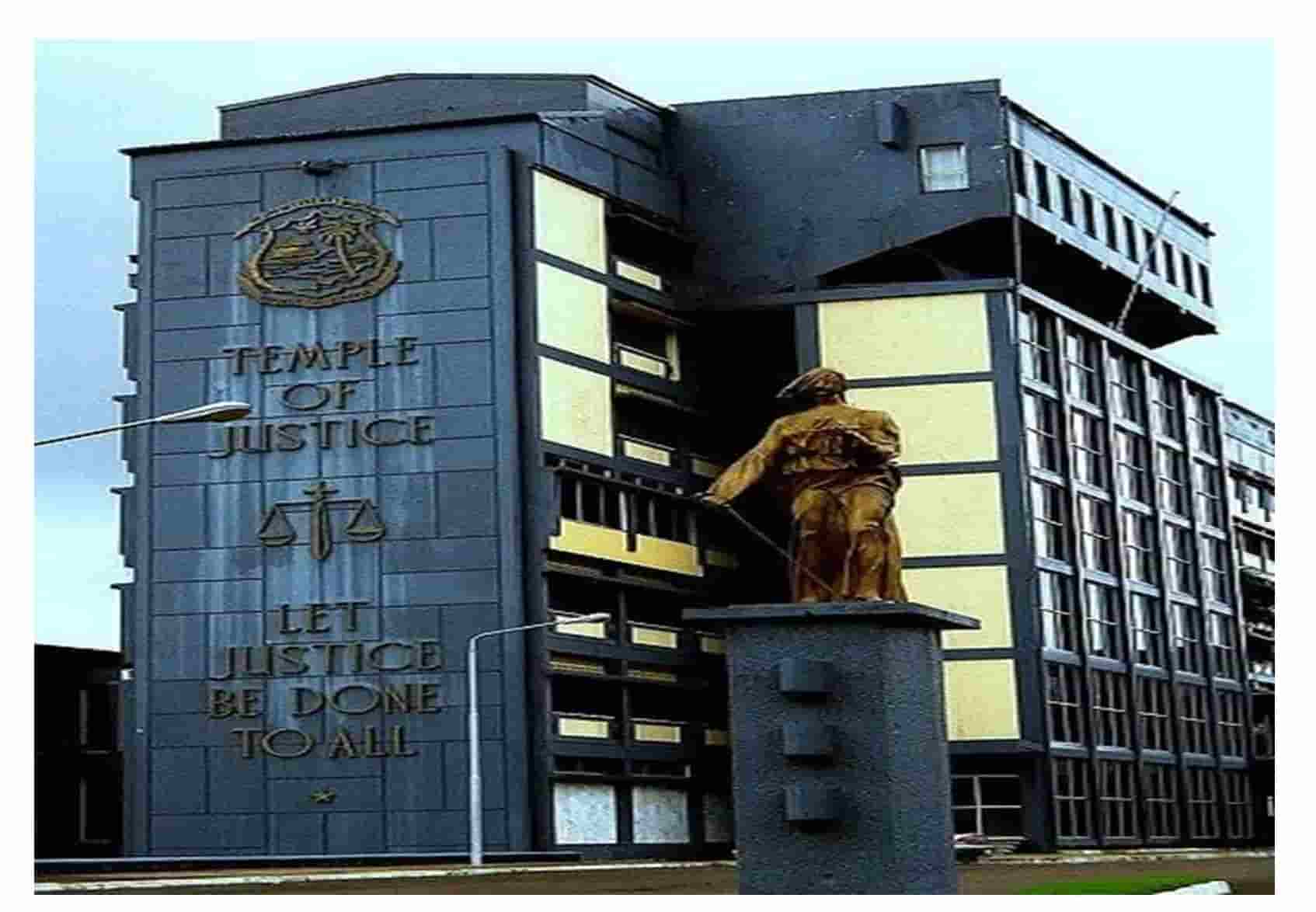
The Civil Law Court, is set to hear consolidated motions in a high-stakes legal battle over the Seaview Golf Course — now the Dr. Oniyama Seaview Country Club — a 5.58-acre jewel within the sprawling, historic Hotel Africa complex in Virginia.
The court will hear two cases that are mirror images of each other — one seeking to protect the investment, the other seeking to erase it from the books.
On one side is the Republic of Liberia, through the Ministry of Justice and the Liberia Land Authority (LLA). On the other is prominent Liberian businessman and philanthropist Dr. C. Nelson Oniyama, the man who transformed the site from bush to greens.
The courtroom is expected to be packed with state lawyers, private counsel, occupants of the Hotel Africa villas, and members of the Liberia Golf Association.
The Property at the Heart of the Fight
This is not just any parcel. The 5.58 acres in dispute is part of Hotel Africa, the iconic 1979 OAU Summit hotel built on the Atlantic coast outside Monrovia. For decades after the civil war, much of the complex lay in ruins, its golf course overgrown and abandoned.
Dr. Oniyama, through his company Seaview Golf Course Inc., says he acquired a 90-year Development Grant Deed from the government, probated and registered with the Center for National Documents and Records Agency (CNDRA), and invested millions to restore, secure and operate it to international standard — a feat that earned him the honor of having the course renamed after him. The government now says that entire transaction should never have happened.
Two Motions, One Collision Course for judicial efficiency, the Court has consolidated two conflicting actions:
Motion 1: Dr. Oniyama vs. LLA — Petition for Judicial Review and Prohibition
Filed by Oniyama, this petition asks the Civil Law Court to exercise its supervisory power to quash a sweeping May 2025 public notice from the LLA.
In that notice, issued by the LLA’s Assistant Director for Public Relations, the Authority ordered ALL occupants of Hotel Africa lands — including the golf course and the historic presidential villas — to vacate within 90 days and surrender their deeds for “verification and redocumentation.”
Motion 2: Republic of Liberia vs. Seaview Golf Course Inc. — Motion to Cancel Deeds
Filed by the state, this motion asks the Court to declare Oniyama’s 90-year deed void from the beginning — void ab initio — and order the CNDRA to expunge it from Liberia’s public records.
Oniyama’s Argument: You Cannot Grant and Then Seize Dr. Oniyama’s legal team is framing this as a classic test of constitutional property rights versus administrative overreach.
Their argument is built on three pillars:
- Vested Rights Under Article 22(a): The Constitution protects property once it is lawfully acquired and registered. Oniyama holds a deed that was probated, registered, and relied upon to make massive investments. That right cannot be taken away by press release.
- Estoppel by Grant: The state cannot give with one hand and take with the other. The LLA itself issued the 90-year grant. Having induced an investor to rehabilitate public land, the Government is estopped from turning around to label that same investor a squatter.
- Only a Court Can Cancel a Deed: Under Liberian law, a deed already on record can only be cancelled by a court of competent jurisdiction after due process, not by an administrative agency. The LLA notice, they argue, was issued without a hearing, without a Board of Commissioners Resolution, and without any judicial order. It is, in their words, ultra vires and an illegal administrative eviction.
Oniyama is asking the Court to issue a Writ of Prohibition barring the LLA from evicting him or interfering with the club, declare the May 2025 notice unconstitutional and void, and dismiss the State’s cancellation motion with costs.
The Government’s Argument: The Deed Was Illegal From Day One. The Republic’s counter-punch is equally sharp: there is nothing to protect because the deed was never legally valid.
The Ministry of Justice and LLA are advancing two fatal flaws:
- No Competitive Bidding: Hotel Africa is Government Land held in public trust. Under Article 55(b) and (c) of the Land Rights Act Regulations of 2018, any sale, lease or long-term concession of public land above a threshold must go through open, public and competitive bidding, with independent valuation and public notice. The government says none of that happened.
- No Legal Authority to Sign: The deed was allegedly executed unilaterally by former LLA Chairman Atty. J. Adams Manobah, without a formal Resolution of the Board of Commissioners, without review by the statutory Inter-Agency Land Technical Committee, and without concurrence from the Ministry of Justice as required for disposition of public lands.
Because of these incurable defects, the State argues the deed is void ab initio — legally stillborn — and must be cancelled and expunged to restore absolute title to the Republic.
Why Today’s Hearing Matters Beyond Golf
Legal analysts say today’s arguments will force the Court to answer two precedent-setting questions that will reverberate across Liberia’s land sector:
First, Substantive Validity: Is a public land grant that skipped competitive bidding and board approval automatically void from the start, or is it merely voidable — meaning it remains valid until a court sets it aside, thereby protecting third-party investments made in good faith?
Second, Procedural Remedy: Even if the original grant was flawed, what is the lawful remedy? Can the LLA reclaim public land through a blanket administrative notice and deed-verification exercise, or must the Government, like any private litigant, come to court to cancel a registered deed?
The ruling will test the balance between two powerful competing interests: the LLA’s broad mandate under the Land Rights Act to recover and protect public lands, and the Constitution’s guarantee of due process and security of tenure for investors holding registered instruments.
Arguments are expected to be lengthy and heated. A ruling is not expected today; the Court is likely to reserve decision after hearing both sides.
But for Liberia’s small but passionate golfing community and for investors watching land tenure security, the outcome will determine whether the flag continues to fly over Seaview — or whether the country’s only championship course returns to the state.